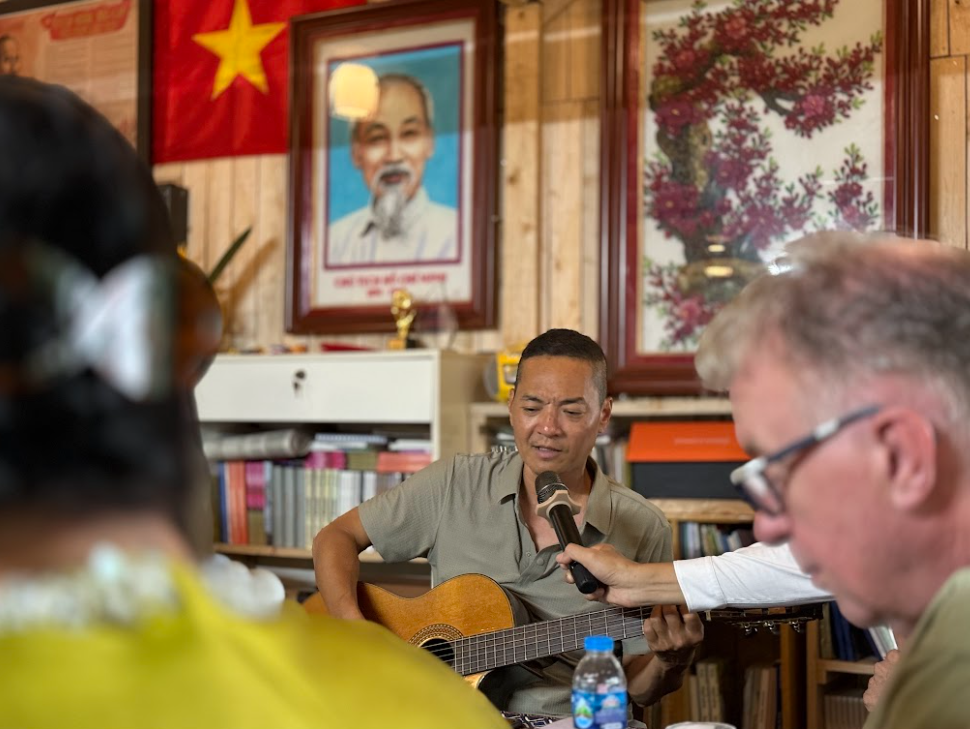
On a summer afternoon in Hanoi, the heavy humidity made the air feel still and slowed conversations. Inside the crowded Artists’ Hill (Đồi Nghệ Sĩ), singer Tùng Nguyễn noticed the heat and offered a poetic solution: “Since it’s too hot to think, let’s just go to the ocean.”
As the first notes of his ballad Biển (The Sea) filled the room, they felt less like a performance and more like a refreshing breeze. The audience could sense the relief not only in the music but also in the hosts’ constant care. All afternoon, the Artists’ Hill team quietly made sure everyone, from experienced writers to new students, found a seat. Instead of the formality of a conference hall, the atmosphere was warm and welcoming, like being invited into someone’s home.
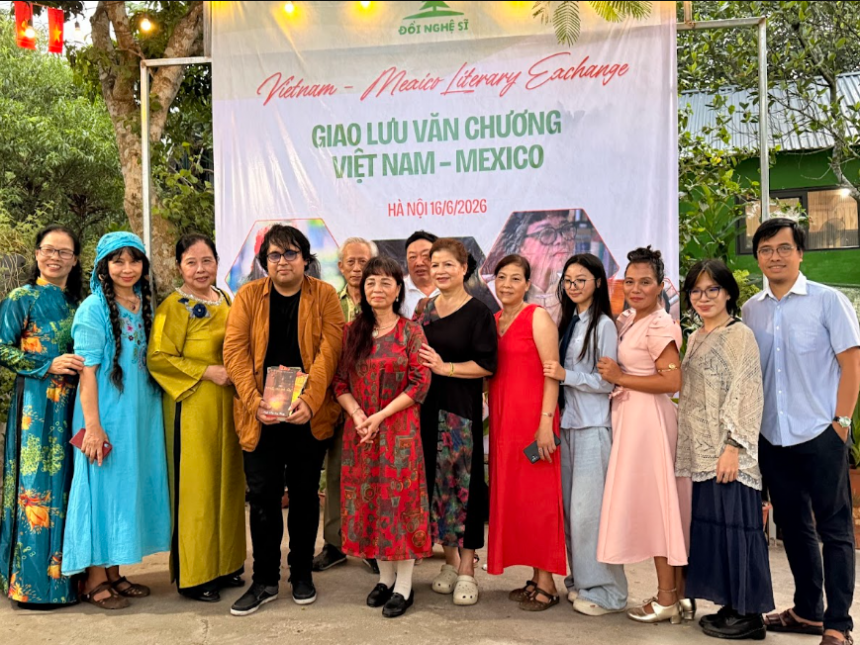
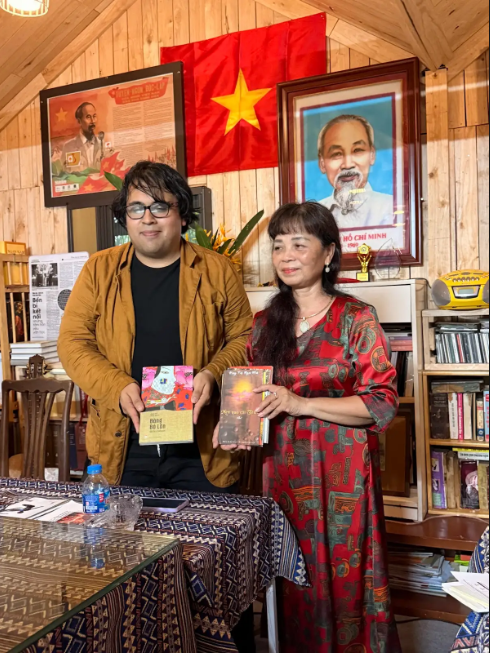
The event was organised to honour Manuel Alejandro Ceballos, a Mexican poet, cultural ambassador, and Director of the Central American Literature Magazine. Nearing the end of a 40-day literary journey across Asia, Ceballos aimed to bring Southeast Asian literature to Central America, where it is still largely unfamiliar. Looking at the full room, he skipped formalities. He shared a personal story: being in Vietnam fulfilled a childhood dream that began years ago, when he first read about the country’s history in a Mexican classroom.
As the afternoon unfolded, the depth of adoration and meticulous preparation the local community had poured into this day became undeniable. The organisers hadn’t just set up chairs; they had spent weeks living in Ceballos’s world, dissecting his language, and rehearsing cross-cultural experiments. Whatever geographical distance lay between Hanoi and Mexico City quickly evaporated once the musicians took over. The room’s collective posture shifted when the melancholic cadence of Bích Khê’s iconic 1939 poem Tỳ bà, with its haunting lament,
“Ô hay buồn vương cây ngô đồng
Vàng rơi! Vàng rơi: Thu mênh mông”,
was paired with the bright, percussive strumming of a Mexican mariachi rhythm. Hearing a classic Vietnamese autumn sorrow carried on the back of an upbeat Latin tempo reshaped the room’s expectations of translation. Musician Châu Phương followed this by taking a poem mourning the loss of traditional Hát Bội opera and arranging it as a Bolero Ranchero, singing fluidly in both English and Vietnamese. Just as things started to feel too serious, the community lightened the mood with Vietnamese humour. After the translation segment ended, the MC joked into the microphone, asking if the musicians would receive any cát-sê (performance fees) that day. The room burst into laughter, a playful reminder that artists everywhere share the same practical concerns.
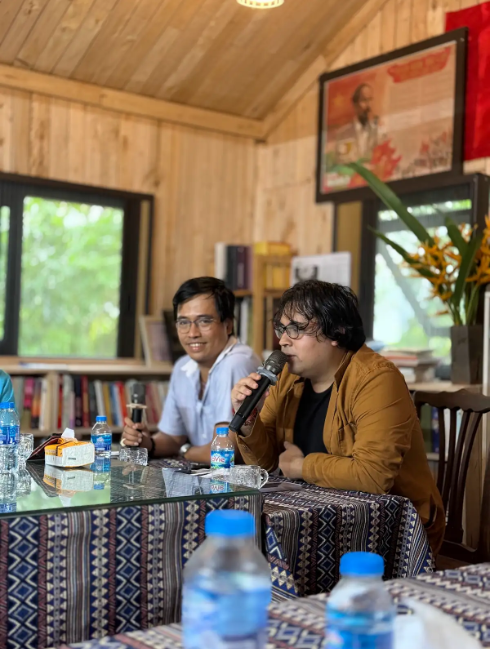
The hosts’ careful planning became even more apparent when the discussion turned to the complex, dreamlike images in Ceballos’s writing. The organisers brought together a wide range of local voices, creating a thoughtful literary conversation in which young faces were respected just as much as experienced scholars.
First to speak was Nguyễn Thị Phương Thảo, a first-year student at the Diplomatic Academy of Vietnam. She offered a sharp analysis of Ceballos’s Anti-Newton Laws trilogy, explaining how the poet uses the strict rules of physics as metaphors for human suffering. “In Ceballos’s world, physics is not just science; it is the architecture of isolation,” Phương Thảo said. “He uses the law of inertia to explain our inability to move forward from grief, and gravity to map the inescapable weight of memory. It is a poetry that calculates the exact mass of human longing.”

Continuing the theme of powerful forces, writer and translator Khánh Phương examined the complex emotions in the poems. She described Ceballos’s work as a brilliant, sometimes disorienting stream of thoughts that reflects the challenges of modern life. “There is no chronological comfort in these poems,” translator Khánh Phương told the quiet room. “Time here is not a straight line, but a trap. Ceballos forces the past and the future to collide in the present moment, perfectly capturing the profound, inescapable anxieties of the modern world.”
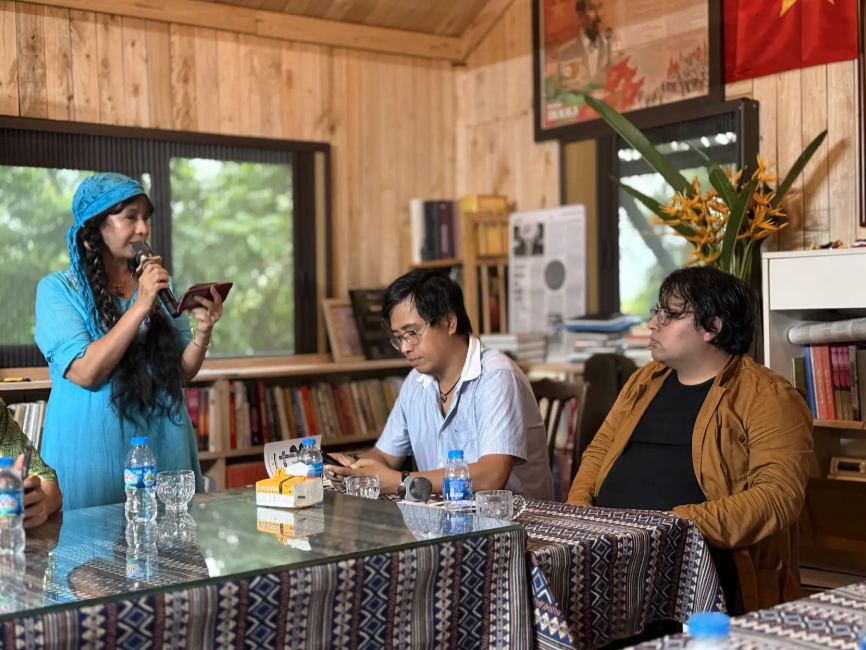
Poet Nông Thị Ngọc Hòa then expanded the lens, pulling the audience out of the modern era and deep into Mexico’s ancestral roots. She argued that these heavy concepts of cyclical time and inescapable destiny are not just modern anxieties, but echoes of the Maya and Aztec civilisations. “To read his work is to witness a profound intersection of Eastern philosophy and indigenous Mexican mythology,” poet Ngọc Hòa explained. “Beneath the modern physics of his verse, you can hear the pulse of an ancient civilisation, one that understood time as an eternal, returning cycle.”
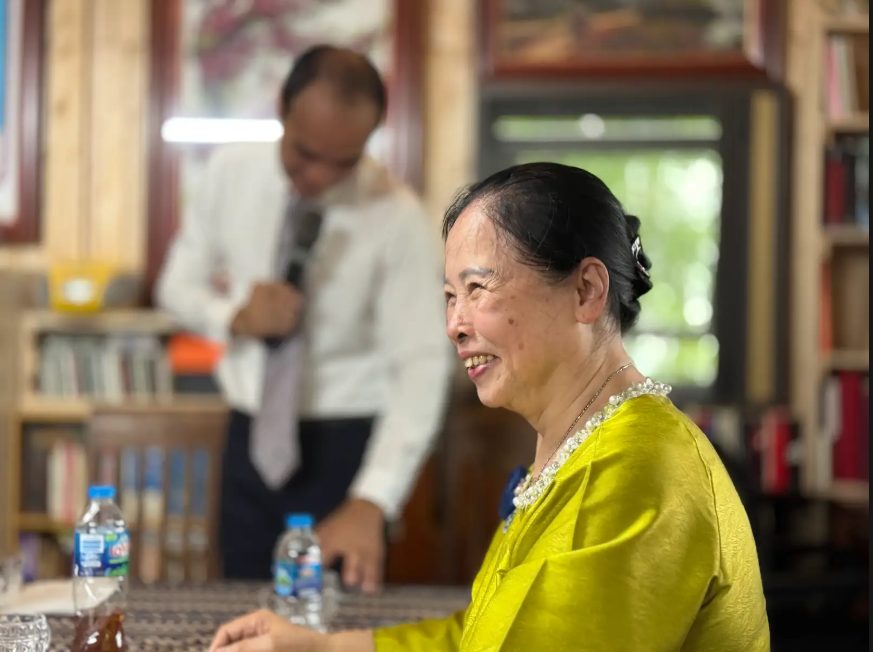
To balance this intense academic critique, young poet Quỳnh Hương brought the room back to the visceral and the personal. She shared that her initial connection to Spanish culture didn’t come from textbooks or philosophical treatises, but from her university days studying Spanish, nurtured by the hope of visiting Mexico one day at the invitation of her dear Mexican friend. Offering a lighter counterpoint to Ceballos’s heavy, trapped time, Quỳnh Hương then recited her own vibrant poetry, playfully personifying the four seasons as a rowdy group of human travellers passing through a house. Where Ceballos’s time was fixed and weighty, Quỳnh Hương’s time was lively and in motion.

Watching this multifaceted intellectual exchange from the crowd was Mark, a guest from the United Kingdom and a current resident of Artists’ Hill. When he was handed the microphone to say a few words, he offered a candid reflection. He admitted he was discovering Ceballos’s work for the first time, sitting in the audience and translating the poems in real time on his phone. Yet he noted that watching a roomful of people from opposite sides of the globe dissect, debate, and elevate a text so fiercely proved that the power of literary exchange can transcend language barriers entirely.
The highlight of the day was the opening of the International Artists’ Hill Library (Thư viện Quốc tế Đồi Nghệ Sĩ), a new space for global literature. This space is designed to be a dynamic cultural bridge rather than a static archive. It steps into the Hanoi cultural scene with an impressive foundation, already housing valuable literary and artistic works from more than 15 countries, including the United States, South Korea, Hungary, Romania, Russia, Germany, Australia, and Egypt. By offering a rich repository of global fiction, poetry, and essays in both their original languages and Vietnamese translations, the library aims to act as a catalyst for ongoing discovery. Its organisers hope the space will serve as a permanent gateway for cross-cultural connection, with a special emphasis on bridging the literary worlds of Vietnam and the world.
By Eira Ng